Student Pilots
Resources and guidance for aspiring aviators
Question Banks
If you are currently busy with exams and are looking for somewhere you can put your current knowledge to the test! Below are 5 great websites you can log into and practice a few mock exams.
Flight Training
Quality training ensures safety, competence, and career success. Here’s the typical progression path for pilot training and what each license or ratings consists of.
SACAA Part 61.03.1:
Minimum age: 17 years
Must hold a valid Part 67 medical certificate
Must hold at least a restricted radiotelephony certificate
Must have a valid Student Pilot Licence (SPL) or equivalent past licence
Complete prescribed flight training at a Part 141 approved training organisation
Pass all theoretical exams and the final skills test
Minimum 45 flight hours, including:
25 hours dual instruction
15 hours solo, including:
5 hours cross-country
1 triangular flight of 150 NM with 2 full-stop landings at different aerodromes
Up to 5 hours may be in an approved flight simulator
SACAA Part 61.10.1
Must hold a valid pilot licence
Complete theoretical training (minimum 5 hours) at a Part 141 approved ATO
Complete 10 hours of instrument training (max 5 hours in simulator)
Perform 5 night take-offs and landings under dual instruction (aeroplane)
Complete a dual night cross-country flight:
Aeroplanes: 150 NM with full-stop landings at 2 different aerodromes
Pass the theory exam and a skills test
SACAA Part 61.11.2
Must hold:
A valid pilot licence
A night rating
A valid Part 67 medical certificate
A general radio certificate
Complete IR training at a Part 141 ATO
Pass the IR theory exams and skills test
Minimum 50 hours cross-country PIC time, with 10 hours in aircraft category applied for
Minimum 40 hours instrument flight training, with:
Max 20–30 hours in simulator (FSTD) (depending on approval)
At least 5 hours in actual aircraft
For multi-engine IR (MEA):
At least 5 hours instrument training in a multi-engine aircraft
3 hours may be in an approved simulator
SACAA Part
Must have at least 70 hours as PIC in an aeroplane
Complete training at an approved ATO (as per SA-CATS 61)
Pass theoretical exams and a skills test with a SACAA Designated Examiner
Training must include:
7 hours of theoretical instruction (briefings on multi-engine ops)
6 hours of dual flight training, including:
2.5 hours on normal multi-engine operations
3.5 hours on engine failure and asymmetric flight
Up to 3 hours may be done in a simulator (FSTD)
If adding an instrument rating to a multi-engine class:
Must complete 5 hours of additional instrument training
Max 3 hours in a simulator (FSTD)
SACAA Part 61.05.1
Minimum age: 18 years
Must hold:
A valid Part 67 medical certificate
A general radiotelephony certificate
A night rating (aeroplane)
A valid SPL, PPL(A), or foreign equivalent
Complete CPL training at an approved Part 141 ATO
Pass the theoretical exams and skills test
Flight Time Requirements:
Total time:
200 hours, or
150 hours (if on an integrated training course)
Including:
100 hours PIC (or 70 hours for integrated course)
20 hours PIC cross-country, with one 300 NM flight and landings at 2 different aerodromes
5 hours night flying PIC, including 10 take-offs/landings at night and a 3-leg cross-country (50 NM per leg)
10 hours instrument instruction (max 5 hours in simulator)
5 hours on complex aircraft (retractable gear, flaps, variable pitch prop, or turbojet)
SACAA Part 61.07.1
Minimum age: 21 years
Must hold:
A valid Class 1 medical certificate
A valid Instrument Rating
A valid or recent SPL, PPL(A), or CPL(A) (or foreign equivalent)
Complete approved training at a Part 141 ATO
Pass the ATPL theory exams and skills test
Flight Time Requirements (in aeroplanes):
Minimum 1,500 total hours, including:
Either:
500 hours PICUS, or
250 hours PIC (up to 150 hours may be PICUS)
200 hours cross-country (up to 100 hours as co-pilot or PICUS)
75 hours instrument time (max 30 hours in simulator)
100 hours night flight (as PIC or co-pilot)
Simulators & Tools
Thorough planning and practice on the ground are essential for safe and confident flying. Using these simulators and tools, you can rehearse approaches, procedures, and navigation before taking to the skies.
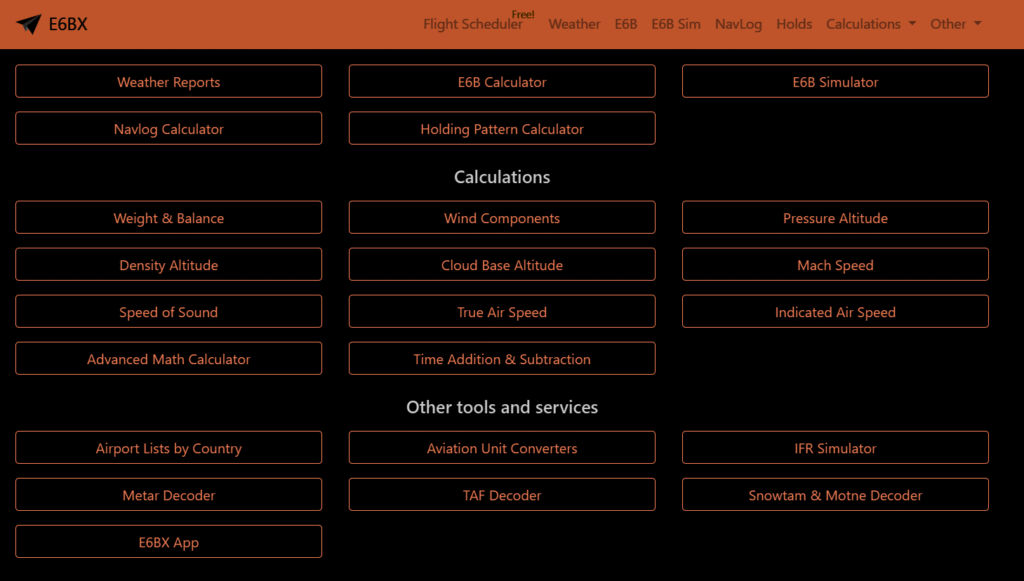
E6BX Sim
E6BX is a free online tool that helps pilots with calculations, flight planning, and IFR practice.
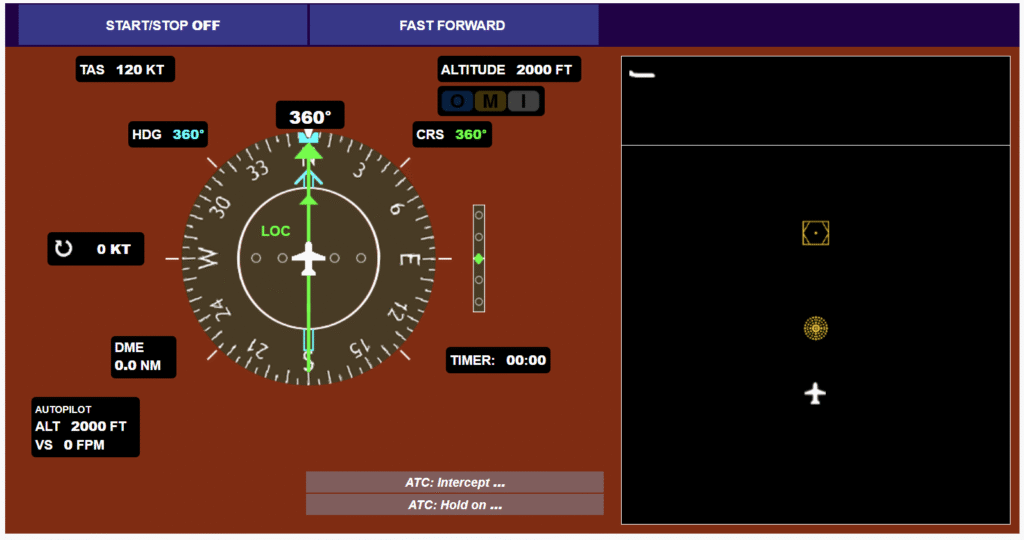
IFR Flight Sim
This flight simulator offers you the opportunity to practice fundamental IFR maneuvers, including tracking, interception, arc DME, holding, procedure turns and more.
Communities
Connect with fellow aviation enthusiasts and professionals through South Africa’s aviation community platforms.

Avcom Forum
South Africa’s largest aviation community platform connecting pilots, enthusiasts, and industry professionals.
Fly Africa Facebook
A vibrant online community where African aviation enthusiasts, pilots, and professionals connect, share insights, and stay updated on all things aviation around the world.
Flight Training Made Simple
An online platform that offers pilot training courses including a Restricted Radio Course and also features an informative blog covering key topics for student pilots in South Africa.